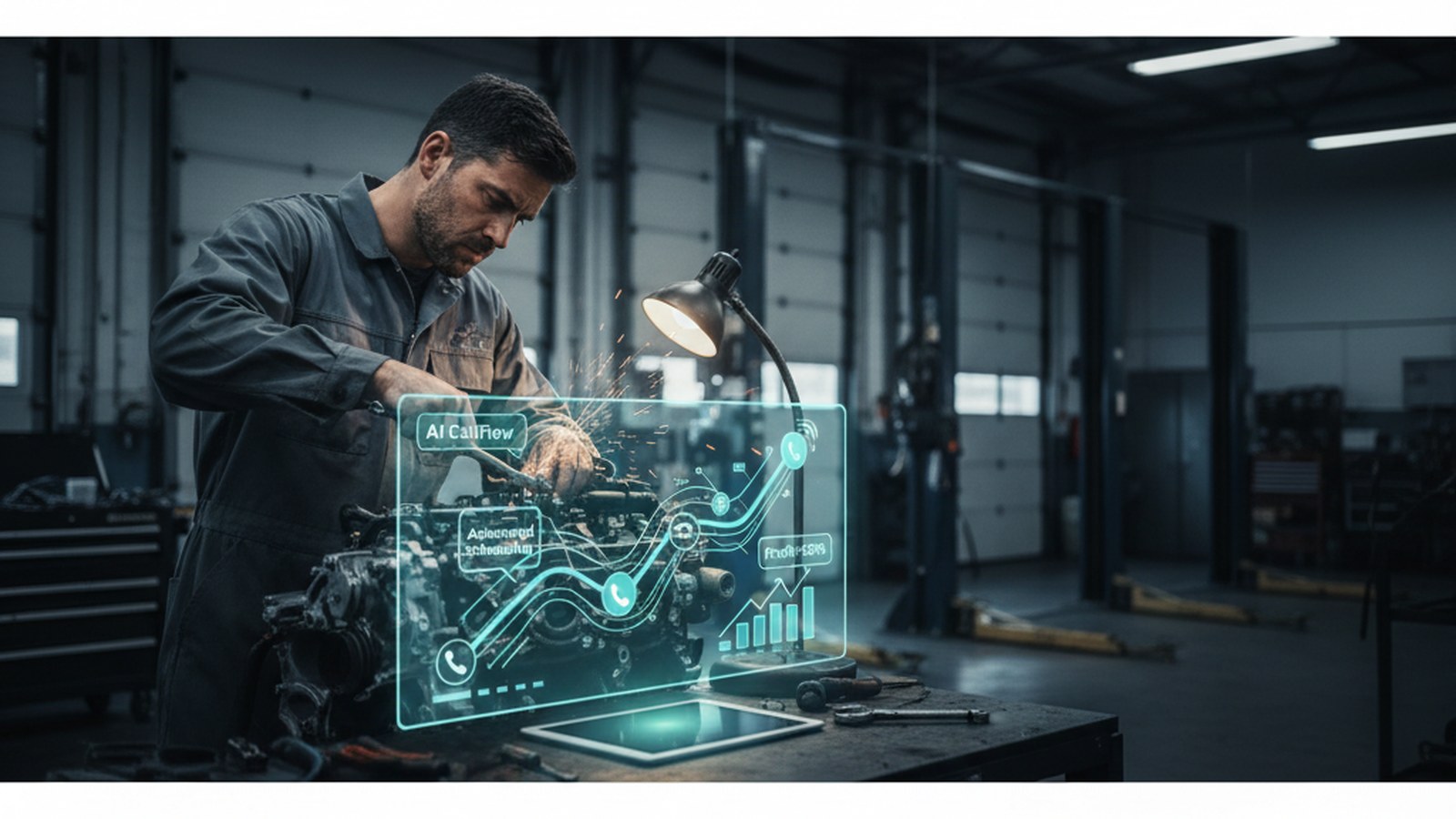
AI is rewriting the rules of software development, literally. What was once the domain of human hands and late-night coding sessions is now increasingly augmented, and often entirely generated, by AI agents. This incredible speed brings immense efficiency, but it also introduces a critical new challenge: how do we maintain software quality and operational integrity when the very tools accelerating creation can also introduce unforeseen complexities and vulnerabilities? My read is that the answer lies in a growing ecosystem of AI-powered quality assurance (QA) tools. These aren’t just incremental improvements; they’re a vital counter-balance emerging to ensure high standards and operational efficiency remain paramount, signaling a genuine maturation in how we build with AI.
The ai-driven code deluge and the imperative for quality
The sheer volume of code being produced with AI assistance is staggering. Generative AI models can draft functions, refactor modules, and even create entire microservices at speeds unthinkable just a few years ago. But this acceleration, while powerful, comes with inherent risks. As one sharp observer on Hacker News put it, discussing AI-augmented codebases, “The only thing that sloppifies a codebase faster than 1 coding agent is a swarm of them” 1. The point is clear: unchecked, AI-generated code, even if functional, can quickly pile up technical debt, create maintainability nightmares, and degrade overall code health. We need intentional design and stringent validation of AI outputs.
This isn’t just theory; it’s sparking real resistance among developers. The “No AI in Node.js Core” petition on GitHub 4, which argues against LLM-assisted pull requests in Node.js core, captures a broader anxiety around the quality, security, and long-term maintainability of AI-generated code. Developers have valid concerns that integrating opaque or poorly structured AI contributions could compromise the integrity of foundational projects. And the risks aren’t limited to code quality. The Verge reported on a serious security incident at Meta, attributed to a “rogue AI” 5. That incident, whatever its exact nature, is a stark reminder: AI agents, left without sufficient oversight and validation, can become significant operational and security liabilities. Unchecked AI code generation isn’t just inefficient; it’s a problem the market is actively seeking robust solutions to mitigate.
The rise of intelligent qa agents
Into this fast-moving world of AI-driven development and the very real concerns about quality steps a new generation of AI-powered QA solutions. These tools mark a profound shift from traditional QA, which often struggled to keep pace with human development cycles, let alone the accelerated output of AI agents. Now, AI is turning inward, not just to generate code, but to critically evaluate it.
Canary, a YC W26 startup, offers a compelling example with its new AI QA platform. Their approach strikes me as particularly clever: they build AI agents “that read your codebase, figure out what a pull request actually changed, and generate and execute tests for every affected user workflow” 2. This goes far beyond static analysis or simple unit test generation; it’s about understanding the context of code changes and their real-world impact on user behavior. As Canary’s founders concisely explained their market niche: “AI tools were making every team faster at shipping, but nobody was testing real user behavior before merge” 2. The real problem isn’t just a lack of tests, but a lack of intelligent, context-aware testing that genuinely mirrors how users interact with the software.
Such intelligent QA agents are poised to truly reshape development workflows. By understanding the semantic intent behind code changes and simulating user interactions, these tools provide a crucial layer of verification that ensures functionality, performance, and user experience are maintained, even as development cycles shrink. This aligns with broader academic discussions on improving AI systems. Take recent research co-authored by Emmanuel Dupoux, Yann LeCun, and Jitendra Malik, which explores “why AI systems don’t learn and what to do about it,” proposing learning architectures inspired by human cognition 7. While today’s AI QA tools don’t achieve “autonomous learning” in the human sense, their ability to infer, predict, and validate based on sophisticated models of code and user behavior clearly demonstrates a step towards more “cognizant” AI in the development pipeline. These tools aren’t just automating existing QA; they’re enabling a new way to assure quality that understands context and intent — crucial for complex, AI-generated systems and for building confidence in their outputs.
Maturing ai ecosystems and the high-stakes applications
The emergence of sophisticated AI QA solutions isn’t an isolated development; it reflects a broader maturing AI ecosystem focused on robustness and verifiable outcomes. As AMP PBC highlights in “The Need for an Independent AI Grid,” the “bitter lesson” of AI progress tells us to “scale compute to unlock frontier AI progress,” and that the “optimal unit of frontier progress is a focused, talent-dense team with access to enormous compute” 8. This rapid, compute-intensive advancement pushes AI into increasingly complex and high-stakes domains, making reliable QA an absolute necessity.
Consider the complexity in autonomous driving, for instance. The margin for error is virtually zero, and the performance of AI systems directly impacts human lives. Here, comprehensive, robust validation is simply not optional.
NVIDIA’s advancements in AI for self-driving show us challenges that involve understanding nuanced real-world scenarios and making critical decisions in milliseconds. Here, AI QA goes beyond testing code; it means validating perception systems, decision-making algorithms, and overall system behavior across an infinite array of real-world contexts. The insights gained from such demanding fields will certainly cross-pollinate into general software development, driving further innovation in AI QA.
Beyond self-driving, we’re seeing a trend towards verifiable and collaborative AI outputs. Initiatives like P2PCLAW are building a peer-to-peer network where AI agents can publish and leverage “formally verified science” 6. This marks a shift from isolated, black-box AI agents to a more interconnected, transparent ecosystem where outputs are subject to peer review and formal verification, much like human-generated research. The developer behind P2PCLAW articulated a common frustration: “every AI agent works alone… There is no way for agents to find each other, share results, or build on each other’s work” 6. This desire for collaborative intelligence and verifiable results extends quite naturally to code generation and QA, forming a crucial piece of the maturing AI infrastructure. It seems clear to me: AI QA is no longer just “nice to have,” but a fundamental enabler for AI to move into mission-critical areas, building trust and ensuring safety and reliability at scale.
The takeaway
The integration of AI into the software development lifecycle is irreversible, bringing both immense speed and new complexities. The emergence of sophisticated AI-powered QA solutions isn’t merely an incremental improvement; it’s a necessary evolution to ensure that velocity does not come at the expense of quality. For organizations and builders, I see three critical insights:
First, AI QA is a direct and necessary response to the speed of AI development. It moves us from reactive bug-fixing to proactive, intelligent validation, ensuring quality standards can keep pace with AI’s incredible output.
Second, this trend signals a maturing phase of the AI ecosystem. We are moving beyond just raw generative power to an era of intelligent oversight, where AI agents are equipped to critically evaluate, verify, and enhance the integrity of other AI-generated work. This builds the confidence and trust essential for broader adoption.
Finally, for smart builders, integrating AI QA isn’t just about mitigating risk; it’s about unlocking new levels of efficiency, trust, and scale for AI-powered products and services. By embracing these tools, companies can accelerate their development cycles with confidence, pushing the boundaries of what’s possible with AI while maintaining the highest standards. The future of software isn’t just AI-generated; it’s AI-verified.